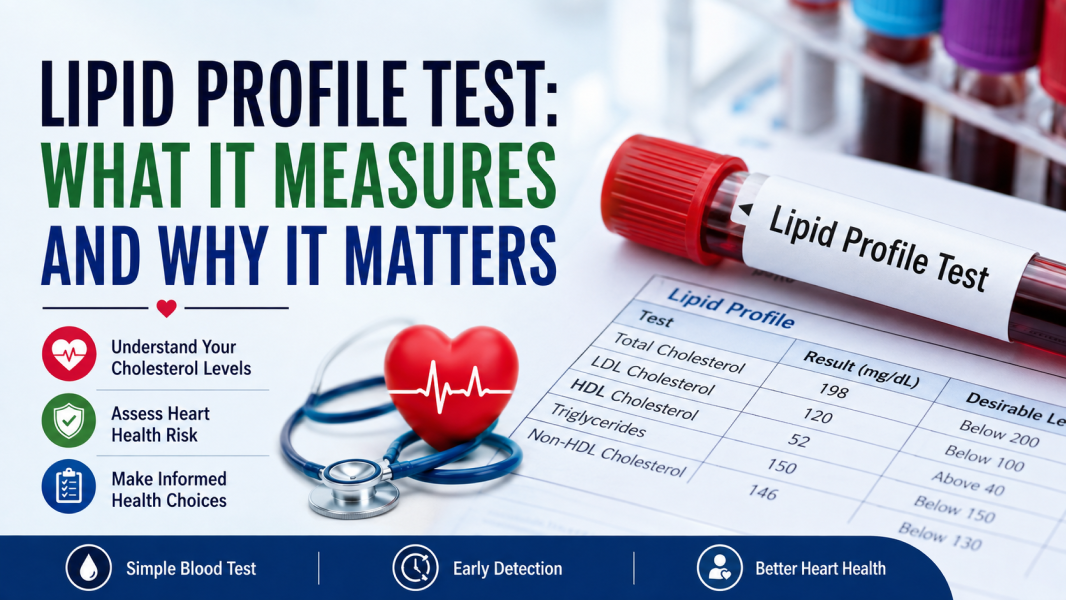
Lipid Profile Test measures cholesterol and triglycerides to assess heart health. Learn what each result means and why regular testing matters.
Lipid Profile Test: A Guide to Better Health
Could a simple blood test reveal important clues about your heart health before you feel anything is wrong? A lipid profile test can. It measures cholesterol and triglycerides in your blood, including LDL, HDL, and total cholesterol. These results help assess cardiovascular risk and guide healthy lifestyle or treatment choices.
🩺 What Is A Lipid Profile Test?
A lipid profile test is a blood test that checks different types of fats in your bloodstream. It is also called a lipid panel, cholesterol panel, or cholesterol test. The test commonly measures total cholesterol, LDL cholesterol, HDL cholesterol, and triglycerides. Some reports may also include calculated values such as non-HDL cholesterol or VLDL.
The test matters because abnormal blood lipid levels can increase the risk of plaque buildup inside arteries. Over time, this buildup can contribute to heart disease, heart attack, and stroke. The good news is that high cholesterol often causes no obvious symptoms. A lipid profile can therefore identify a potential problem before you feel unwell.
🔬 What Does A Lipid Profile Measure?
A typical lipid profile gives you several important numbers. Each number tells a slightly different part of the story about your cardiovascular health.
The main measurements include:
- Total cholesterol: The overall amount of cholesterol in your blood.
- LDL cholesterol: Often called “bad” cholesterol because it can contribute to artery plaque.
- HDL cholesterol: Often called “good” cholesterol because it helps transport cholesterol away from arteries.
- Triglycerides: A type of fat that your body stores and uses for energy.
- Non-HDL cholesterol: Total cholesterol minus HDL cholesterol.
Together, these values provide a broader picture than checking total cholesterol alone.
| Lipid Measurement | What It Tells You | General Adult Reference |
| Total Cholesterol | Overall cholesterol level | Below 200 mg/dL |
| LDL Cholesterol | Cholesterol linked with artery plaque | Generally below 100 mg/dL |
| HDL Cholesterol | Helps remove cholesterol from blood | Higher levels are generally better |
| Triglycerides | Main form of fat in the blood | Below 150 mg/dL |
| Non-HDL Cholesterol | Total cholesterol minus HDL | Generally below 130 mg/dL |
These numbers are general reference points, not personal treatment targets. Your ideal levels can differ based on your medical history and cardiovascular risk.
❤️ Why Is LDL Cholesterol Important?
LDL stands for low-density lipoprotein. It carries cholesterol through the bloodstream, but too much LDL can contribute to plaque buildup in artery walls. This process is known as atherosclerosis. As plaque builds up, arteries can become narrower and blood flow can become restricted.
That is why LDL is often called “bad cholesterol.” However, the right LDL goal is not identical for everyone. Someone with existing cardiovascular disease may have a much lower target than a person with fewer risk factors. Your healthcare provider should interpret your LDL result in the context of your overall health.
💙 What Does HDL Cholesterol Mean?
HDL means high-density lipoprotein. It is often called “good cholesterol” because it helps move cholesterol away from the bloodstream and toward the liver. The liver can then process and remove cholesterol from the body. Higher HDL levels are generally associated with better cardiovascular health.
Still, HDL should not be viewed alone. A high HDL number does not automatically cancel out high LDL or high triglycerides. Doctors consider the entire lipid profile along with factors such as blood pressure, diabetes, smoking, age, and family history.
🥑 What Are Triglycerides?
Triglycerides are another type of fat measured during a lipid profile. Your body converts extra calories into triglycerides and stores them in fat cells for later energy use. Levels can rise because of factors such as excess calories, diets high in sugar or fat, alcohol use, certain health conditions, and some medicines.
A triglyceride level below 150 mg/dL is generally considered normal for adults. Levels from 150 to 199 mg/dL are commonly considered borderline high, while 200 mg/dL or higher is high. Very high levels need medical attention because they can carry additional health risks.
📊 How To Understand Lipid Profile Results
Reading a cholesterol report can feel confusing at first. The key is to avoid focusing on just one number. For example, a person may have normal total cholesterol but still have an LDL level that deserves attention. Your healthcare provider considers the complete pattern rather than treating every result separately.
As a general guide, adult results are often interpreted like this:
- Total cholesterol: Below 200 mg/dL is generally desirable.
- LDL cholesterol: Below 100 mg/dL is generally considered optimal for many adults.
- Triglycerides: Below 150 mg/dL is generally considered normal.
- HDL cholesterol: Higher levels are generally favorable.
- Non-HDL cholesterol: Below 130 mg/dL is a commonly used healthy reference.
However, these ranges should not replace personalized medical advice.
🧪 Do You Need To Fast Before A Lipid Test?
Whether you need to fast depends on the test and your healthcare provider’s instructions. Some lipid tests can be performed without fasting, while fasting may be requested in certain situations. When fasting is required, providers commonly recommend avoiding food for about 8 to 12 hours.
If you are told to fast, plain water is generally allowed. You may also be asked to avoid smoking, exercise, chewing gum, or other activities during the fasting period. Always follow the instructions from the laboratory or healthcare provider rather than assuming you need to fast.
🩸 What Happens During A Lipid Profile Test?
The procedure is usually quick and simple. A healthcare professional collects a small blood sample from a vein, usually in your arm. The sample is sent to a laboratory, where the lipid measurements are analyzed. You may feel a brief pinch when the needle enters your skin.
Most people can return to their normal routine afterward. Mild soreness or bruising can sometimes occur where the blood was drawn. Serious complications from a routine blood draw are uncommon. 😊
📅 When Should You Get A Lipid Profile?
The timing of cholesterol testing depends on your age, risk factors, family history, and existing health conditions. Healthy adults may be screened periodically, while people with cardiovascular risk factors may need testing more often. Your healthcare provider can recommend a schedule that fits your individual situation.
You may need closer monitoring if you have factors such as:
- A family history of high cholesterol or heart disease
- Diabetes
- High blood pressure
- Smoking
- Excess weight
- Low physical activity
- A history of heart disease or stroke
- Certain medicines or medical conditions
Regular testing can help track whether lifestyle changes or prescribed treatments are working.
🍎 How Can You Improve Your Lipid Levels?
Your lipid numbers are influenced by more than one factor. Diet, physical activity, body weight, genetics, age, medical conditions, and medications can all play a role. Some people can improve their cholesterol and triglycerides through lifestyle changes, while others may need medication.
Helpful habits may include:
- Eat more fiber-rich foods, such as vegetables, fruits, beans, and whole grains.
- Choose healthier fats and limit foods high in saturated and trans fats.
- Stay physically active according to your healthcare provider’s advice.
- Maintain a healthy weight if weight loss is appropriate for you.
- Limit alcohol, especially if triglycerides are elevated.
- Avoid smoking to support overall cardiovascular health.
Small changes can add up over time. 🌱
⚠️ What Can Affect Your Lipid Test Results?
A lipid profile does not always tell the whole story from one blood draw. Certain medicines, pregnancy, infections, medical conditions, and alcohol intake can affect lipid measurements. Recent eating patterns may also influence some results, particularly triglycerides.
This is why it is important to tell your healthcare provider about medicines, supplements, and relevant health conditions. Never stop a prescribed medicine simply to change a test result. If a result seems unexpected, your provider may recommend another test or additional evaluation.
🧠 Why A Lipid Profile Matters For Heart Health
High cholesterol usually does not cause noticeable symptoms. That makes screening especially valuable because elevated LDL or triglycerides can exist without headaches, chest pain, or other warning signs. A lipid profile gives healthcare professionals measurable information that can help estimate cardiovascular risk.
Think of the test as one piece of a larger health puzzle. Your provider may also consider blood pressure, blood sugar, smoking status, family history, age, and other risk factors. Looking at these factors together gives a more useful picture than cholesterol numbers alone.
| Risk Factor | Why It Matters |
| High LDL | Can contribute to artery plaque |
| High Triglycerides | May increase cardiovascular risk |
| Low HDL | Can be associated with higher risk |
| High Blood Pressure | Adds stress to artery walls |
| Diabetes | Can increase cardiovascular risk |
| Smoking | Damages blood vessels and raises risk |
| Family History | May increase inherited risk |
The goal is not simply to chase a “perfect” number. The goal is to understand your overall risk and make informed health decisions.
📝 What Should You Ask Your Doctor?
If your lipid profile comes back outside the expected range, try not to panic. One abnormal number does not automatically mean you have heart disease. Ask your healthcare provider what the result means for your specific risk profile.
Useful questions include:
- What is my LDL goal?
- Are my triglycerides too high?
- Is my HDL level healthy?
- Do I need another lipid test?
- Could a medicine or health condition affect my results?
- Should I change my diet or activity?
- Do I need treatment or monitoring?
These questions can turn a confusing lab report into a practical health plan.
📋 Key Takeaways From A Lipid Profile Test
A lipid profile is a simple blood test that provides important information about cholesterol and triglycerides. It commonly measures total cholesterol, LDL, HDL, and triglycerides, while some reports include additional measurements.
The most important points to remember are:
- LDL: Lower levels are generally better.
- HDL: Higher levels are generally favorable.
- Triglycerides: Lower levels within the healthy range are preferred.
- Total cholesterol: Provides an overall cholesterol measurement.
- Risk factors: Results must be interpreted in context.
❤️ Bottom line: A lipid profile test can help uncover cardiovascular risk even when you feel completely healthy. Understanding your results can help you and your healthcare provider decide what steps, if any, should come next.
❓ Frequently Asked Questions
What Does A Lipid Profile Test Check?
A lipid profile checks cholesterol and triglycerides in your blood. It commonly includes total cholesterol, LDL, HDL, and triglycerides. These results help assess cardiovascular risk.
Is Fasting Needed For A Lipid Profile Test?
Fasting is not required for every lipid test. Your provider may ask you to fast for about 8 to 12 hours. Always follow the specific instructions given for your test.
What Is A Normal Lipid Profile Result?
General adult reference points include total cholesterol below 200 mg/dL and triglycerides below 150 mg/dL. LDL below 100 mg/dL is generally considered optimal for many adults. Personal targets can differ based on your health history.
How Often Should I Get A Lipid Test?
Testing frequency depends on your age, risk factors, family history, and health conditions. Some healthy adults are screened every several years. People with higher cardiovascular risk may need more frequent testing.
Can A Lipid Profile Detect Heart Disease?
A lipid profile does not directly diagnose heart disease. Instead, it measures blood fats that can help estimate cardiovascular risk. Your provider may use the results with other health information to assess your overall risk.